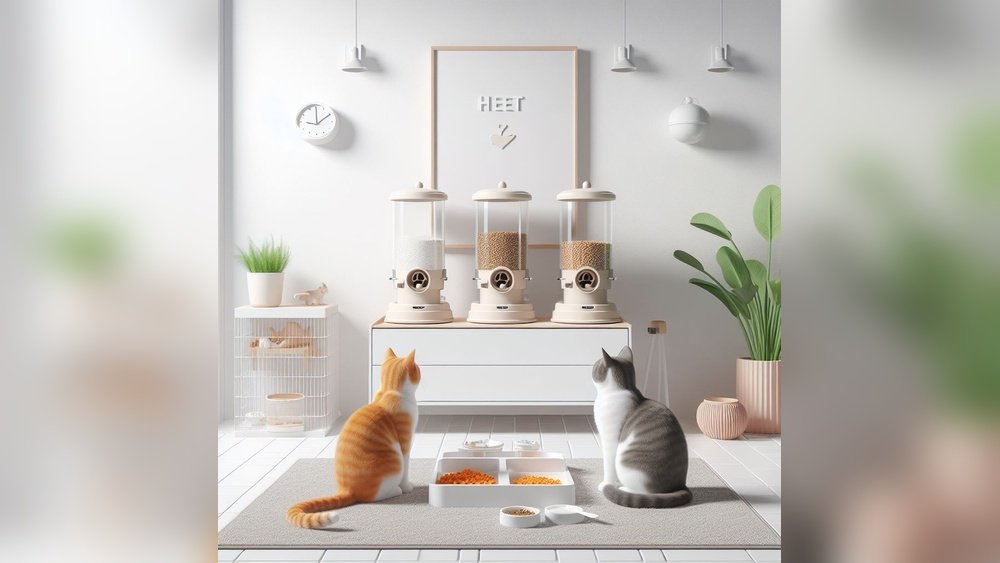
You know the feeling. You’re running late for work, your cat is yowling at 5:45 a.m. like the world is ending, and you’re pouring kibble into a bowl half asleep just to buy ten more minutes of peace. Or maybe it’s the opposite problem — you travel for work sometimes, and leaving a giant bowl of food out for your cat to free-feed all weekend isn’t great for their waistline or your peace of mind.
An automatic cat feeder solves both problems. It keeps mealtimes consistent even when your schedule isn’t, and it stops the guilt spiral of wondering whether your cat is overeating out of boredom or genuinely hungry because you’re stuck in traffic. The right feeder also makes multi-cat households a lot easier to manage, especially if one cat needs a special diet and the other one will happily eat anything not nailed down.
We looked at reliability, portion accuracy, ease of cleaning, and how well each feeder handles real-life chaos — power outages, Wi-Fi drops, cats who try to break in. Here are five that consistently hold up.
This post contains affiliate links. As an Amazon Associate, Fluffy Eyes earns from qualifying purchases at no extra cost to you.
PetSafe Healthy Pet Simply Feed Automatic Feeder
This is the feeder we’d point a first-time buyer toward. It’s simple, it’s sturdy, and it doesn’t try to do too much. You program up to 12 meals a day with portion sizes down to 1/8 cup, and a battery backup keeps it running through short power outages so your cat never misses a meal because the power flickered.
- Easy-to-read dial and button interface, no app required
- Removable, dishwasher-safe lid and tray for easy cleaning
- Works on battery or plug-in power, with backup during outages
- Good for cats who need portion control without a lot of tech fuss
Cons:
- No app or remote feeding option
- Single food compartment, so not ideal for two cats with very different diets
WOPET Automatic Cat Feeder with Voice Recorder
If your cat is the type who needs a familiar voice to actually believe dinner has arrived, this one lets you record a 10-second message that plays at mealtime. It’s also a solid choice for larger cats or homes with two cats sharing one feeder, since the hopper holds a generous amount of dry food.
- Voice recording feature to call your cat to meals
- Programmable up to 4 meals a day, 1-39 portions per meal
- Large capacity hopper, good for bigger cats or short trips away
- Infrared sensor helps detect food level and prevent jams
Cons:
- Plastic components feel less premium than pricier models
- No smartphone app, so scheduling is done manually on the unit
PETLIBRO Automatic Cat Feeder with App Control
This is the pick for people who want full control from their phone. You can set schedules, trigger a surprise meal remotely, and check feeding history right from the app, which is genuinely reassuring if you’re stuck at the office later than planned. It also has a desiccant slot to help keep kibble dry and fresh.
- Wi-Fi and app control with remote feeding and history logs
- Customizable portions and up to 10 meals a day
- Dual power option (plug-in with battery backup)
- Built-in desiccant compartment to reduce food moisture
Cons:
- Relies on stable home Wi-Fi for full functionality
- App occasionally needs updates that can interrupt scheduling
Cat Mate C500 Automatic Pet Feeder
For wet food or a mix of wet and dry, the Cat Mate C500 is one of the few automatic feeders built specifically to handle it well. It has five individual compartments with ice packs underneath to keep wet food fresh, which matters a lot if you’re feeding a cat with kidney issues or one who just refuses dry food entirely.
- Five sealed compartments keep wet or dry food fresh and separate
- Ice pack slot helps prevent spoilage in warmer rooms
- Simple mechanical timer, no app or Wi-Fi dependency
- Good option for cats on prescription or wet-food-only diets
Cons:
- Only good for one feeding cycle before needing a refill/reset
- Battery-only operation, no plug-in backup
SureFeed Microchip Pet Feeder
This one is worth the splurge if you have a multi-cat household where one cat keeps stealing another’s food. It reads your cat’s microchip (or an included RFID tag) and only opens for the registered cat, so the food thief gets locked out. It’s a genuine game-changer for households managing weight or prescription diets across multiple cats.
- Microchip and RFID recognition prevents food stealing between pets
- Sealed lid keeps food fresh and pests out between visits
- Can link to a connect hub for app monitoring (sold separately)
- Battery-powered, so placement isn’t limited by outlets
Cons:
- Significantly pricier than standard timed feeders
- Not a scheduled feeder on its own — it’s an access-control bowl, not a portioned meal dispenser, unless paired with their connect feeder line
Buying Guide: How to Choose an Automatic Cat Feeder
Wet food vs. dry food compatibility
Most budget feeders are built for dry kibble only, using an auger or rotating tray system that would make a mess of wet food. If your cat eats wet food, look specifically for a feeder with sealed, refrigerated, or ice-pack compartments like the Cat Mate C500.
Portion control accuracy
If your cat needs to lose weight or is on a vet-recommended diet, portion precision matters more than fancy features. Look for feeders that measure in small increments (1/8 cup or less) rather than vague “small, medium, large” settings.
App vs. no app
An app is convenient for remote feeding and peace of mind while traveling, but it also means your feeder depends on Wi-Fi stability and software updates. If you just want reliable, boring consistency, a manual-dial feeder may actually serve you better.
Battery backup
Power outages happen, and a feeder that resets or stops without battery backup can leave your cat waiting. Prioritize feeders with dual power or battery backup so a blip in electricity doesn’t mean a missed meal.
Multi-cat households
If you have more than one cat, especially with different dietary needs, a microchip-recognition feeder prevents one cat from eating another’s portion. For cats on the same diet, a large-capacity single feeder can work fine.
Ease of cleaning
Look for removable, dishwasher-safe bowls and trays. Feeders with hard-to-reach corners or non-removable lids get gross fast, especially with wet food.
Noise level
Some auger-style feeders make a distinct grinding or whirring sound when dispensing. This isn’t a dealbreaker, but if your cat is easily startled, it’s worth checking user feedback on noise before buying.
Frequently Asked Questions
How do I stop my cat from figuring out how to open the feeder early?
Choose a feeder with a locking lid or one with tamper-resistant compartments. Cats are surprisingly persistent, so units with flimsy latches tend to get defeated within a few weeks by a determined cat.
Can an automatic feeder replace free feeding?
Yes, and for many cats it’s actually healthier. Scheduled portions help prevent the overeating and weight gain that often comes with an always-full bowl, especially for indoor cats who aren’t burning many calories.
What happens if the feeder jams while I’m away?
This is a real risk with any mechanical feeder, which is why it helps to have a backup plan, like a pet sitter checking in or a camera to monitor food levels remotely. No feeder is 100% jam-proof, so don’t rely on one alone for extended trips.
How far in advance can I load an automatic feeder?
Most dry food feeders can safely hold enough kibble for a week or more, since dry food doesn’t spoil quickly. Wet food feeders should generally not be loaded more than 24 hours ahead, even with ice packs, to avoid spoilage.
Do automatic feeders work for kittens?
They can, but kittens usually need more frequent, smaller meals than adult cats, so make sure the feeder you choose allows enough daily feeding cycles. Always check with your vet about appropriate portion sizes for a growing kitten.
Whichever feeder you land on, the real win is consistency. Cats thrive on routine, and a good automatic feeder takes the guesswork (and the 5 a.m. yowling) out of mealtime for both of you.