This post contains affiliate links. If you buy something through one of them, we may earn a small commission at no extra cost to you. We only recommend products we’d genuinely suggest to a friend — see our full Affiliate Disclosure for details.
One cat’s litter box is manageable with almost any litter. Two or more cats sharing boxes is a different problem entirely — odor compounds fast, clumps need to hold together under heavier daily use, and tracking multiplies with every extra paw. Regular single-cat litter often falls apart under that load, both literally and in terms of smell control.
We looked at what actually matters for multi-cat homes: odor neutralization that holds up over 24-48 hours (not just at the moment of use), clump strength that doesn’t crumble during scooping, dust levels since more cats means more litter disturbed daily, and cost per pound since multi-cat households go through litter fast.
What to Look for in a Multi-Cat Litter
- Clumping strength — weak clumps break apart during scooping and contaminate the rest of the box, which is a bigger problem with heavier daily use.
- Odor control that lasts — look for activated carbon or baking soda formulations, not just a fragrance layered on top.
- Low dust — more litter box traffic means more airborne dust if you’re not using a low-dust formula, which matters for both cats and household members with allergies or asthma.
- Litter box math — regardless of which litter you choose, the standard rule is one litter box per cat plus one extra, placed in different locations around the home.
Best Overall: Clumping Clay Litter with Activated Carbon
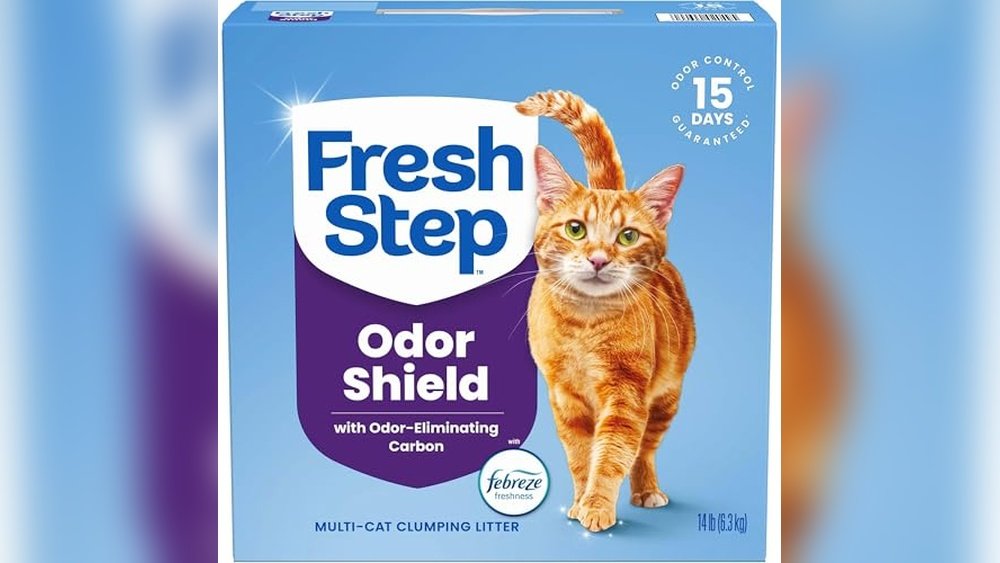
For most multi-cat households, a premium clumping clay litter with activated carbon or charcoal for odor control offers the best balance of clump strength, odor performance, and cost per pound. These formulas are widely available, easy to scoop daily, and hold up well even with three or more cats sharing boxes.
Shop clumping multi-cat litter on Amazon
Best for Odor Control: Baking Soda-Infused Clumping Litter
If odor is your primary concern over dust or tracking, look for a litter that combines baking soda with clumping clay. These tend to neutralize ammonia smell more aggressively than carbon-only formulas, which matters most in homes with limited ventilation or boxes kept in smaller rooms.
Shop odor-control litter on Amazon
Best Low-Dust Option: Low-Dust Clumping Formula
For households with allergy-sensitive humans or cats with respiratory sensitivity, a low-dust clumping formula reduces airborne particles significantly compared to standard clay litter, without sacrificing much clump strength.
Shop low-dust litter on Amazon
Best Budget Option: Bulk Clumping Clay Litter
Multi-cat households burn through litter fast, so cost per pound matters. Bulk clumping clay litter (bought in the largest bag or box available) usually offers the best value without a major drop in performance, especially if you’re scooping daily and doing full changes every 2-3 weeks.
Shop bulk cat litter on Amazon
Best Natural/Alternative Option: Clumping Litter Made from Corn, Wheat, or Walnut
Plant-based clumping litters (corn, wheat, or walnut shell) are a solid option for households wanting to avoid clay dust or sodium bentonite entirely. Odor control varies more by brand than with clay formulas, so this is one category worth checking reviews on before committing to a large bag.
Shop natural clumping litter on Amazon
Tips for Managing Litter Boxes in a Multi-Cat Home
- Scoop at least once, ideally twice, a day — odor and clump breakdown compound quickly with multiple cats.
- Spread boxes across different rooms or floors rather than lining them up together; some cats won’t use a box near another cat’s.
- Do a full litter change and box wash every 2-3 weeks even with clumping litter, since odor builds up in the plastic itself over time.
- Watch for one cat guarding access to boxes, which can cause another cat to avoid the litter box entirely and lead to accidents elsewhere in the house.
Frequently Asked Questions
How many litter boxes do I need for multiple cats?
The standard guideline is one box per cat, plus one extra. For three cats, that means four boxes, ideally spread across different locations.
Is clumping or non-clumping litter better for multiple cats?
Clumping litter is almost always the better choice for multi-cat homes since it lets you remove waste daily without needing a full litter change, which is more sanitary and more cost-effective at scale.
How often should I fully replace the litter, not just scoop?
Every 2-3 weeks for clumping litter in a multi-cat home is a reasonable baseline, though homes with heavier use may need it more often.
Why does my cat avoid the litter box even though it looks clean?
Cats can be sensitive to subtle odor buildup in the box material itself, competition from other cats, or litter type preference. If avoidance is new or persistent, it’s also worth ruling out a urinary tract issue with your vet before assuming it’s purely behavioral.
Final Thoughts
The right litter for a multi-cat household comes down to matching clump strength and odor control to your specific setup — number of cats, ventilation, and how often you can realistically scoop. Whichever formula you choose, pairing it with the right number of boxes in the right locations matters just as much as the litter itself.