
Fluffy Eyes is reader-supported. When you buy through links on our site, we may earn an affiliate commission at no extra cost to you.
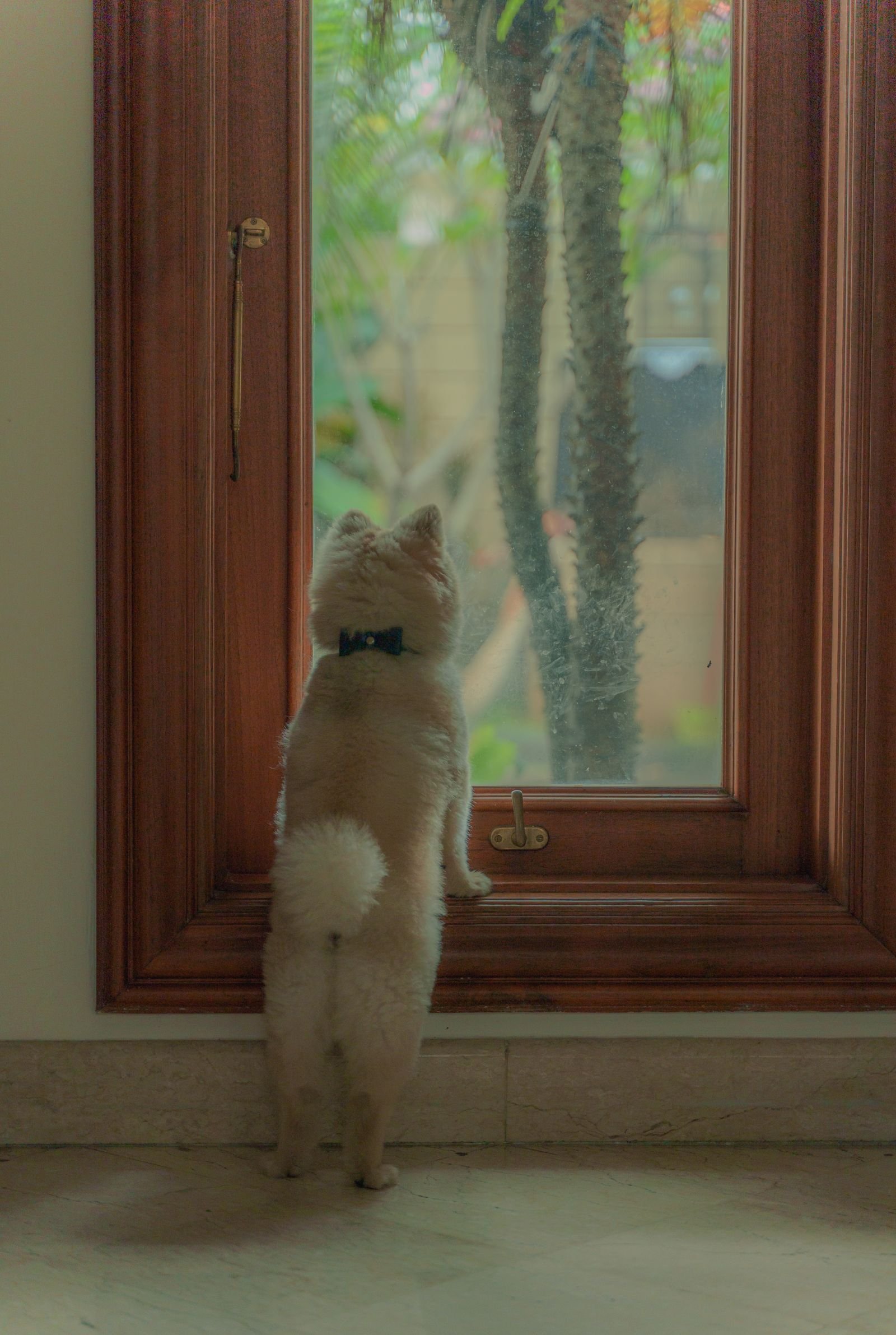
You grab your keys and your dog starts pacing. You close the door and the barking starts — then the howling, and maybe by the time you’re home, a shredded couch cushion. Dog separation anxiety is one of the most common behavior problems owners face, affecting an estimated 1 in 5 dogs at some point in their lives. It’s also one of the most treatable — if you approach it the right way.
This guide covers everything: how to tell true separation anxiety apart from boredom, what causes it, a step-by-step training plan, when medication makes sense, and the tools that actually help. Where we’ve written deeper guides on a topic, we’ll link you there along the way.
What Is Separation Anxiety in Dogs?
Separation anxiety is a panic response — not disobedience. A dog with true separation anxiety isn’t choosing to destroy your baseboards out of spite; their nervous system goes into overdrive when their person leaves, similar to a panic attack in humans. That distinction matters because punishment doesn’t just fail to fix it — it reliably makes it worse.
It exists on a spectrum. Mild cases whine for a few minutes and settle. Severe cases injure themselves clawing at doors, salivate through the day, or refuse to eat until you return.
Symptoms: Is It Separation Anxiety or Boredom?
The core symptoms of dog separation anxiety include:
- Vocalizing — persistent barking or howling that starts shortly after you leave
- Destruction targeted at exits — chewed door frames, scratched doors, bent crate bars
- House soiling — accidents from an otherwise potty-trained dog, only when alone
- Drooling, panting, and pacing — signs of physiological stress, often visible on camera
- Pre-departure anxiety — pacing or trembling when you pick up keys or put on shoes
- Over-the-top greetings — frantic, prolonged excitement when you return
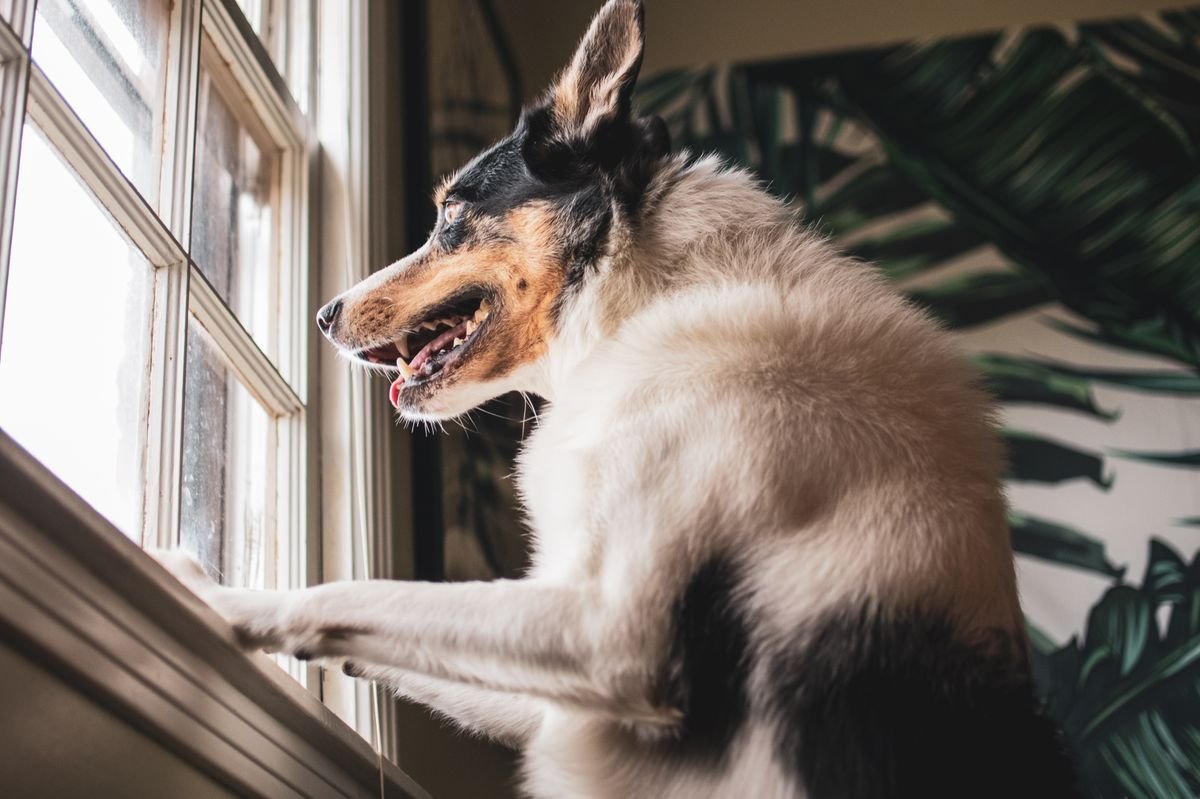
The key differentiator: a bored dog chews the fun stuff (shoes, pillows) at random times, while an anxious dog targets exit points and starts within the first 30 minutes of your departure. A cheap way to know for sure is to watch: our roundup of the best smart pet cameras covers options that let you check in from your phone. For a fuller symptom breakdown, see our guide to the signs of separation anxiety in dogs.
What Causes Separation Anxiety?
There’s rarely one single cause, but the common triggers are well documented. Rehoming and shelter stays are major ones — if you’ve recently adopted, our guide on what to expect with a shelter dog covers the adjustment period. Other triggers include a sudden schedule change (a return to office work after months at home), moving house, the loss of a family member or another pet, and simple genetics — some breeds, especially velcro breeds like Vizslas, Labs, and Border Collies, are more predisposed.
One myth worth killing: letting your puppy sleep in your bed does not cause separation anxiety. What does contribute is a puppy never learning that being alone is safe — which is why gradual alone-time training from day one matters so much. If you’re starting with a young dog, crate training done right is one of the best preventive tools there is.
How to Treat Dog Separation Anxiety: Step by Step
Step 1: Rule out the medical and the mundane
A vet visit first. Urinary infections, GI issues, and cognitive decline in senior dogs can all mimic anxiety symptoms. At the same time, make sure your dog’s basic needs are met — an under-exercised working breed will produce anxiety-like behavior no training plan can fix.
Step 2: Kill the departure cues
Dogs learn your leaving ritual — keys, shoes, coat — long before you reach the door. Devalue these cues: pick up your keys, then sit back down. Put on shoes, make coffee. Repeat until the cues stop predicting departure and your dog stops reacting to them.
Step 3: Practice graduated departures
This is the core of treatment. Leave for 10 seconds and return before your dog escalates. Then 30 seconds, a minute, five, twenty — always returning before panic starts. The single most common mistake is moving too fast. If your dog regresses, drop back to the last duration that felt easy. Expect weeks, not days.
Step 4: Make departures boring and arrivals calm
No dramatic goodbyes, no excited hellos. Ignore your dog for the first few minutes after returning, and greet them once they’re calm. You’re teaching that departures and arrivals are non-events.
Step 5: Build positive alone-time associations
Give a high-value chew or stuffed puzzle toy that only appears when you leave. Our list of the best interactive dog toys for separation anxiety covers the toys that reliably hold a dog’s attention for 20+ minutes. All of this training should be rooted in rewards, not corrections — our positive reinforcement training guide explains the method.
Tools That Actually Help
No product cures separation anxiety on its own — but paired with the training above, these two have the strongest track records.
ThunderShirt Classic Anxiety Vest

With more than 55,000 Amazon reviews, the ThunderShirt is the most widely used anxiety aid for dogs. It works like a weighted blanket: constant gentle pressure on the torso that lowers arousal. It won’t fix severe cases alone, but for mild-to-moderate anxiety, many owners see calmer departures within the first week — and it’s drug-free.
ThunderEase (Adaptil) Calming Pheromone Diffuser

This plug-in diffuser releases a synthetic version of the pheromone mother dogs produce while nursing. It’s vet-recommended, odorless to humans, and covers about 700 square feet. Research on pheromone therapy shows meaningful (if not universal) reductions in stress behaviors — at this price, it’s a low-risk addition to a training plan.
If your dog panics in a standard crate or is an escape artist, a purpose-built crate can prevent injury — see our roundup of the best dog crates for separation anxiety. And for coverage during long workdays, compare pet sitting vs. boarding or check what a pet sitter costs.
When to Consider Medication
If your dog injures itself, can’t be left alone for even a few minutes, or shows no progress after 6–8 weeks of consistent training, talk to your vet about medication. Fluoxetine and clomipramine are FDA-approved for canine separation anxiety, and shorter-acting options exist for predictable events. Medication isn’t a failure or a life sentence — it lowers panic enough for training to work, and many dogs taper off once new habits are established. For severe cases, ask for a referral to a veterinary behaviorist (DACVB) or a certified separation anxiety trainer (CSAT).
What NOT to Do
Three things consistently make separation anxiety worse: punishment (your dog connects your anger to your return, adding fear to the panic), flooding (forcing a panicking dog to “cry it out” for hours teaches them alone-time is exactly as bad as they feared), and getting a second dog as a fix (the anxiety is about you, not company — you may end up with two anxious dogs).
Frequently Asked Questions
How do I stop my dog’s separation anxiety at night?
Night-time distress is usually confinement anxiety rather than separation anxiety, especially in puppies. Move the crate near your bedroom, establish a consistent bedtime routine, and gradually move the crate to its permanent spot over a few weeks.
How long does it take to fix separation anxiety in dogs?
Mild cases often improve within 4–8 weeks of consistent graduated-departure training. Moderate to severe cases typically take several months, and may need medication support. Progress is rarely linear — regressions are normal.
What dog breeds get separation anxiety the most?
Velcro breeds bred to work closely with humans top the list: Labrador Retrievers, Border Collies, Vizslas, German Shepherds, Cavalier King Charles Spaniels, and Bichon Frises. Rescue dogs of any breed are also at higher risk.
Does crate training help separation anxiety?
It can — a properly crate-trained dog often treats the crate as a safe den. But never use the crate as a first response to existing panic: a dog that injures itself in a crate needs the training plan above and possibly an escape-proof crate designed for anxious dogs.
Can separation anxiety in dogs be cured?
Most dogs improve dramatically, and many reach the point where they rest calmly through a full workday alone. “Cure” depends on severity — think of it like managing any chronic condition: the panic can fade, but the routine that fixed it should stay.
Should I ignore my dog crying when I leave?
Don’t rely on it. Brief protest whining resolves on its own, but true panic escalates the longer it continues. If crying lasts beyond a few minutes or intensifies, you’re past your dog’s threshold — shorten departures and rebuild more slowly.
The Bottom Line
Separation anxiety is panic, not disobedience — and panic responds to patient, gradual training, not punishment. Start with a vet check, desensitize your departure cues, build alone-time in small increments, and add tools like the ThunderShirt or a pheromone diffuser to take the edge off. If you’re not making progress in two months, get professional help — the earlier, the easier.