Fluffy Eyes is reader-supported. When you buy through links on our site, we may earn an affiliate commission at no extra cost to you.
Cats are experts at hiding illness. It’s an evolutionary leftover — in the wild, looking weak makes you a target — but it means that by the time a cat looks obviously sick, the problem is often well advanced. Knowing the subtle signs your cat is sick can be the difference between an easy treatment and an emergency.
This guide covers the early warning signs most owners miss, the symptoms that mean “call the vet today,” and the red-flag emergencies that can’t wait until morning.
Early Signs Your Cat Is Sick (The Ones Owners Miss)
Illness in cats almost always shows up as behavior change before anything physical. Watch for:
- Hiding more than usual — the single most common early sign; a social cat that starts living under the bed is telling you something
- Changes in appetite or thirst — eating less is concerning, but drinking noticeably more water is a classic sign of kidney disease, diabetes, or thyroid problems
- Litter box changes — going more often, straining, missing the box, or changes in stool. A cat straining to urinate with nothing coming out is an emergency (more below)
- Grooming changes — an unkempt, greasy coat means your cat feels too unwell to groom; overgrooming a single spot signals pain there
- Sleeping more, playing less — hard to judge in a species that sleeps 16 hours a day, which is why knowing your cat’s normal matters
- Vocalizing differently — a quiet cat that starts yowling (especially at night) or a chatty cat that goes silent
Many of these overlap with stress rather than illness — our guide to the signs your cat is stressed explains how to tell the difference.
Is My Cat Sick or Just Tired?
The question every owner asks at 10 p.m. Here’s the practical test: a tired cat still responds normally to the things it cares about — food, treats, a favorite toy, the sound of a can opener. A sick cat opts out. If your cat skips a meal but greets you, plays, and uses the box normally, watch and wait 24 hours. If lethargy comes with any second symptom — skipped meals, hiding, vomiting, litter box changes — treat it as illness, not tiredness.
Signs Your Cat Is Sick or in Pain
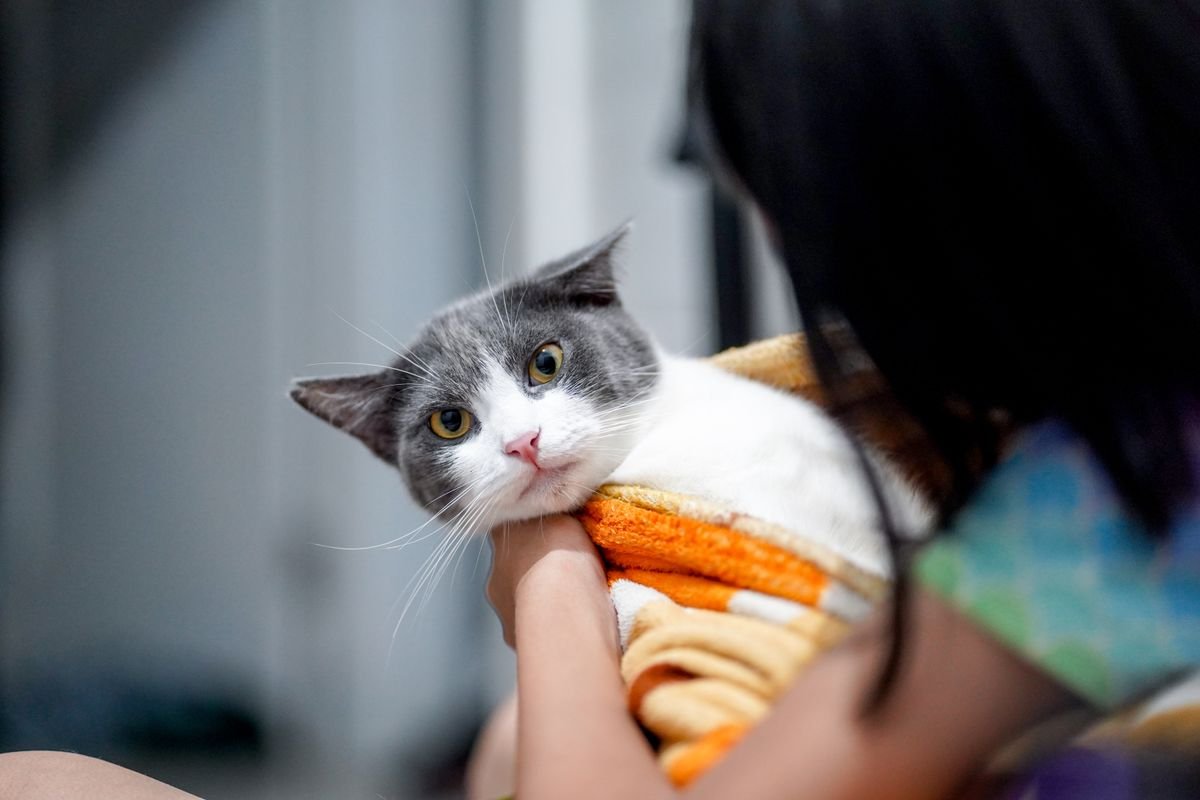
Pain has its own signature in cats, and it’s subtle. Veterinary researchers developed the “feline grimace scale” around five facial cues: ears rotated outward or flattened, squinted eyes, tension around the muzzle, whiskers pulled forward or clumped, and head held low. Beyond the face, look for:
- Reluctance to jump onto furniture they used to reach easily (a top sign of arthritis in older cats)
- Flinching or biting when touched in a specific spot
- A hunched, tucked posture instead of relaxed sprawling
- Purring at odd times — cats also purr to self-soothe when in pain
If your senior cat hesitates at jumps or moves stiffly, read our guide on caring for an aging cat — arthritis is far more common (and treatable) than most owners realize.
Red-Flag Emergencies: Go to the Vet Now
These symptoms warrant an immediate call to your vet or an emergency clinic, day or night:
- Straining in the litter box with little or no urine — in male cats especially, urinary blockage can be fatal within 24–48 hours
- Open-mouth breathing or panting — cats almost never pant; respiratory distress is always an emergency
- Repeated vomiting or vomiting with lethargy — especially with a possible toxin exposure
- Not eating for 24+ hours — cats can develop dangerous liver problems (hepatic lipidosis) from fasting alone
- Sudden inability to use the back legs — a possible blood clot, extremely painful and time-critical
- Seizures, collapse, or unresponsiveness
For a full action plan on what to do before you reach the clinic, see our guide to common pet emergencies.
Check the Basics at Home
Two inexpensive tools make your at-home assessment far more useful to your vet on the phone.
A Pet Thermometer

A cat’s normal temperature runs 100.5–102.5°F — a “warm, dry nose” tells you nothing. The iProven pet thermometer (4.5/5, 4,200+ reviews) gives a reliable reading in seconds, and telling your vet “her temp is 104” gets a very different response than “she seems warm.”
A Carrier Your Cat Doesn’t Hate

Nothing delays emergency care like a 20-minute battle to crate the cat. A top-loading carrier — like this Amazon Basics two-door model with over 65,000 reviews — lets you lower a sick, resistant cat in from above instead of shoving them through a front door. Leave it out as furniture so it never signals “vet trip.”
Prevention: Catch Problems Before Symptoms
Because cats hide illness so well, annual vet exams (twice yearly for seniors) catch what you can’t — bloodwork picks up kidney and thyroid disease long before symptoms show. Keeping up with your cat’s vaccination schedule is part of the same visit. Between checkups, a monthly 60-second home scan — run hands over the body for lumps, check teeth and gums, watch weight — builds the baseline that makes “something’s off” obvious early.
Frequently Asked Questions
How can I tell if my cat is sick or just tired?
Test their response to high-value triggers: treats, toys, the food cupboard. A tired cat engages; a sick cat doesn’t. Lethargy plus any second symptom — appetite loss, hiding, vomiting — should be treated as illness.
What are the first signs of a sick cat?
Behavior changes come first: hiding, reduced appetite, increased thirst, litter box changes, and a decline in grooming. Physical symptoms like vomiting or weight loss usually appear later.
When should I take my sick cat to the vet?
Same-day: not eating for 24 hours, repeated vomiting, or marked lethargy. Immediately: straining without urinating, open-mouth breathing, collapse, seizures, or dragging back legs.
Do cats purr when they are sick or in pain?
Yes. Purring isn’t only contentment — cats purr to self-soothe. A cat that purrs while hunched, hiding, or refusing food may be in pain, not happy.
Why is my sick cat drinking so much water?
Increased thirst is one of the most medically significant symptoms in cats — the classic triad is kidney disease, diabetes, and hyperthyroidism. Book a vet visit with bloodwork; all three are manageable when caught early.
Can I give my cat human medicine?
No — never without explicit veterinary direction. Acetaminophen (Tylenol) is lethal to cats, ibuprofen causes kidney failure, and even aspirin is dangerous. Call your vet before giving anything.
The Bottom Line
You know your cat’s normal better than anyone — trust that instinct. Behavior changes are the earliest and most reliable sign of illness in cats, a “wait and see” window should never exceed 24 hours without food, and the red-flag symptoms above skip the waiting entirely. When in doubt, a phone call to your vet is free.